
TurboTax Concierge: A New Seller Archetype
Portfolio type
Case study
Project timeline
Oct 2025 to May 2026
Sector
Fintech, Enterprise
Role
E2E lead on Product design, Service design, Design system, User research
Platform
Responsive Web App
Goal
TurboTax was evolving from a digital-only product into a hybrid model that blends AI, human experts, and in-person services. At the center of that shift was a net-new seller role called Concierge, the front door between a lead and a TurboTax expert.
Concierge needed to be designed from the ground up: the archetype, the end-to-end experience, the tooling, and the service layer behind it across both virtual and in-store channels.
My Impact
I owned E2E design for the Concierge archetype from the ground up service blueprinting, E2E flows, Salesforce tooling, research, and forward-looking provocations. I moderated all three Concierge research roundtables and built the design provocations tested in each session. I also collaborated with cross-functional partners across IEP and Domain Expert teams to influence how Concierge handoffs shaped the broader expert platform, ensuring continuity across the full lead-to-service journey.
Outcomes
53% of conversions influenced by Concierge
~3K inbound calls supported daily
38% ET2S vs. 14% target / ↑ 152 ITT
59.8% S2C vs. 53% target / ↑ 113 ITT
4× increase in outbound reach with late version / ~7.8% conversion at scale
400+ virtual and retail concierges in May 2026
Empathize
What is a Concierge?
Concierge is a seller and guide role that sits between a lead and a TurboTax expert. Think of it as a white-glove layer, someone who reduces uncertainty, answers product questions, captures lead information, and connects customers to the right expert through scheduling or warm transfer. Not a tax expert, but the person who makes sure you end up with the right one.

In simple terms: Concierge turns interest into action.
Before Activate Experts, this role didn't exist inside TurboTax. There was no structured intake layer, no defined seller archetype, and no tooling built around it. Most of the sales motion happened post-auth, inside a product experience not designed for pre-sale conversations.
What is Activate Experts?
Activate Experts is the broader initiative Concierge sits inside of a strategic growth program aimed at making TurboTax the go-to destination for Assisted filers. TurboTax had historically a small share of a massive addressable market, with tens of millions of potential customers filing through CPAs, tax stores, and other competitors.
The premise: turn the expert network from a passive service layer into an active growth engine. Concierge is the front end of that engine.
A closer look at the Activate Experts program.
Define
Problem statement
I am...
a TurboTax Concierge
I am trying to…
move quickly through a live call, quote pricing with confidence, and connect a lead to the right expert
But…
I don't always have the right context or tools at the right moment in the conversation
Because…
the experience wasn't built around how a live sales conversation actually flows
Which makes me feel...
like I'm constantly catching up instead of guiding the customer forward
Business goal
Design and ship an end-to-end Concierge experience across virtual and in-store archetypes that enables a new seller role to drive conversion at scale, supports the Activate Experts growth initiative, and lays the foundation for an AI-native future.
Research
Longitudinal roundtables
Before any screens, I ran a series of in-person research roundtables with active Concierge agents the same small group across three sessions spanning October 2025 through February 2026. This longitudinal approach let me test evolving concepts with people who already had context, so each session built on the last rather than starting from zero. I moderated all three sessions and built the design provocations tested in each one.
Concierges were overwhelmingly enthusiastic about IEP over Salesforce, especially around AI, ecosystem integration, and cross-team visibility.
Oct 2025
Roundtable 1 Connect to Expert
Validated the v2 redesign automated expert matching, scheduling logic, and the new inline flow replacing modal-heavy patterns.
Dec 2025
Roundtable 2 Early provocations
Tested early v3 concepts around feed-based lead management, persistent notes, and conversation-first LQQ flows.
Feb 2026
Roundtable 3 Pricing tools and future concepts
Concept-tested embedded pricing vs. AIC-based flow, and ran provocations around expert search, store locator, and an AI-native Concierge in IEP.
Key themes
Notes are infrastructure, not a feature. Agents need to start writing the moment someone picks up before LQQs begin, before a path is chosen. Notes can't be buried, locked, or fragmented across tabs.
Conversation-first over form-first. The existing experience pushed agents into early branching decisions before they had context. Agents don't know what a customer needs until the conversation unfolds. This validated a significant rethink of the LQQ flow.
Automation is trusted when it's transparent. Agents embraced automated expert matching and virtual fallback but only when the logic was visible. When the system did something unexpected in the background, trust broke down.
Embedded pricing beats a separate experience. Agents overwhelmingly preferred pricing embedded directly in the flow over a separate AIC-based tool. Speed and continuity in one surface outweighed any added capability of a context switch.
Ideate
E2E user flow
Before touching a single screen, I mapped the full E2E user flow for the Concierge archetype across virtual and in-store channels. This covered every step of the journey from the moment a lead comes in through expert handoff, including decision points, branching logic, and the key moments where the experience could break down.
Getting the quad and cross-functional partners aligned on the full journey before building screens is how we avoid expensive rework later. A shared flow artifact means everyone is reacting to the same thing, and disagreements surface early when they're cheap to fix.
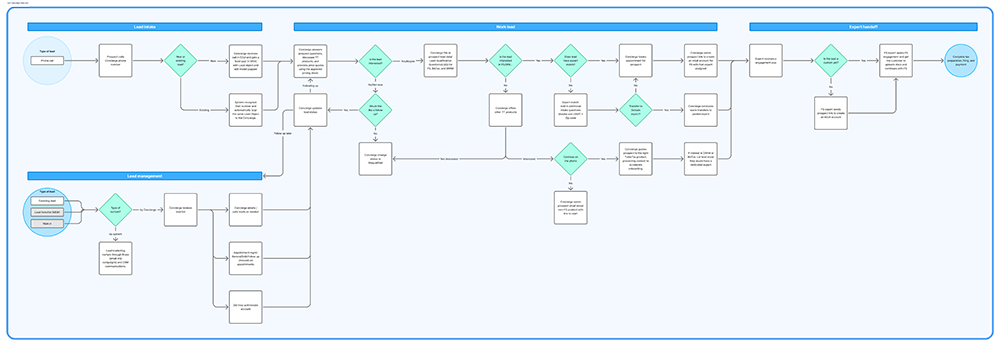
E2E user flow virtual and in-store archetypes
The handoff from Concierge to expert was a broken seam context wasn't passing cleanly, and the flow made clear we needed to design for that explicitly
In-store and virtual archetypes shared most of the same journey but branched at specific moments: store wayfinding, walk-in handling, and in-person appointment logic
Several decision points in the flow surfaced gaps between what the system supported and what a Concierge actually needed mid-call, giving us a clear list of problems to solve before screens
E2E capability map
With the service layer defined, I built a capability map covering the full Concierge E2E from lead intake through expert handoff, across both archetypes. This gave the team a shared artifact for roadmap planning, flagged design gaps, and made it clear which capabilities were net new vs. enhancements to existing tooling.
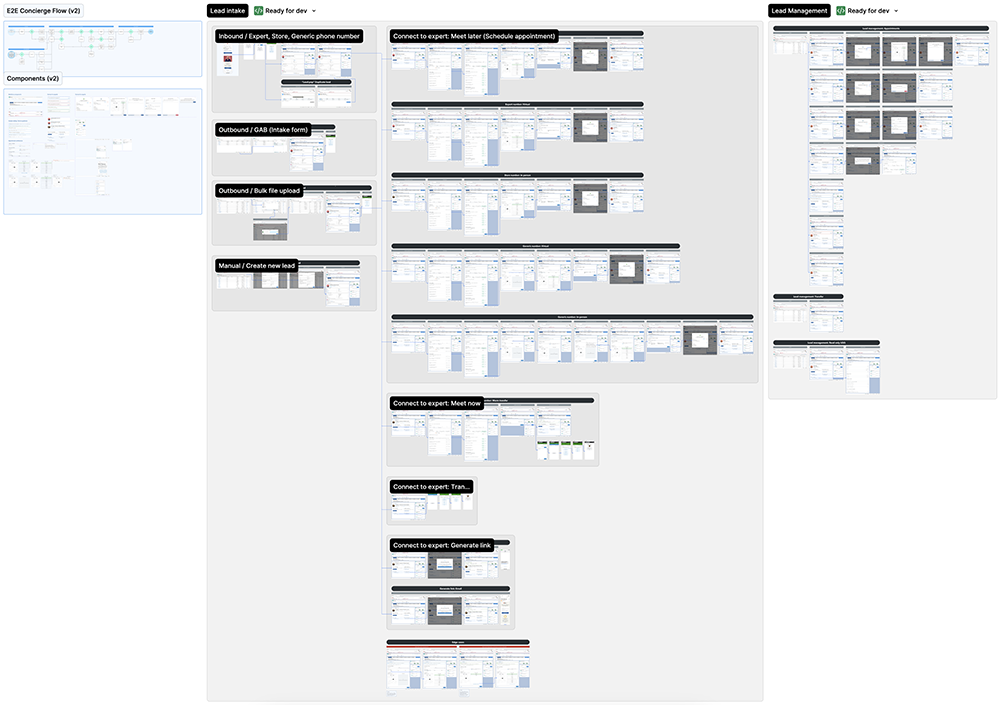
E2E user flow virtual and in-store archetypes
Design
The core flow
The Concierge experience runs through Salesforce with a custom AppFabric layer (Concierge Connect) built on top. The design challenge wasn't just UI, it was rethinking the logic and information architecture of a CRM that wasn't built for a conversation-first sales role.
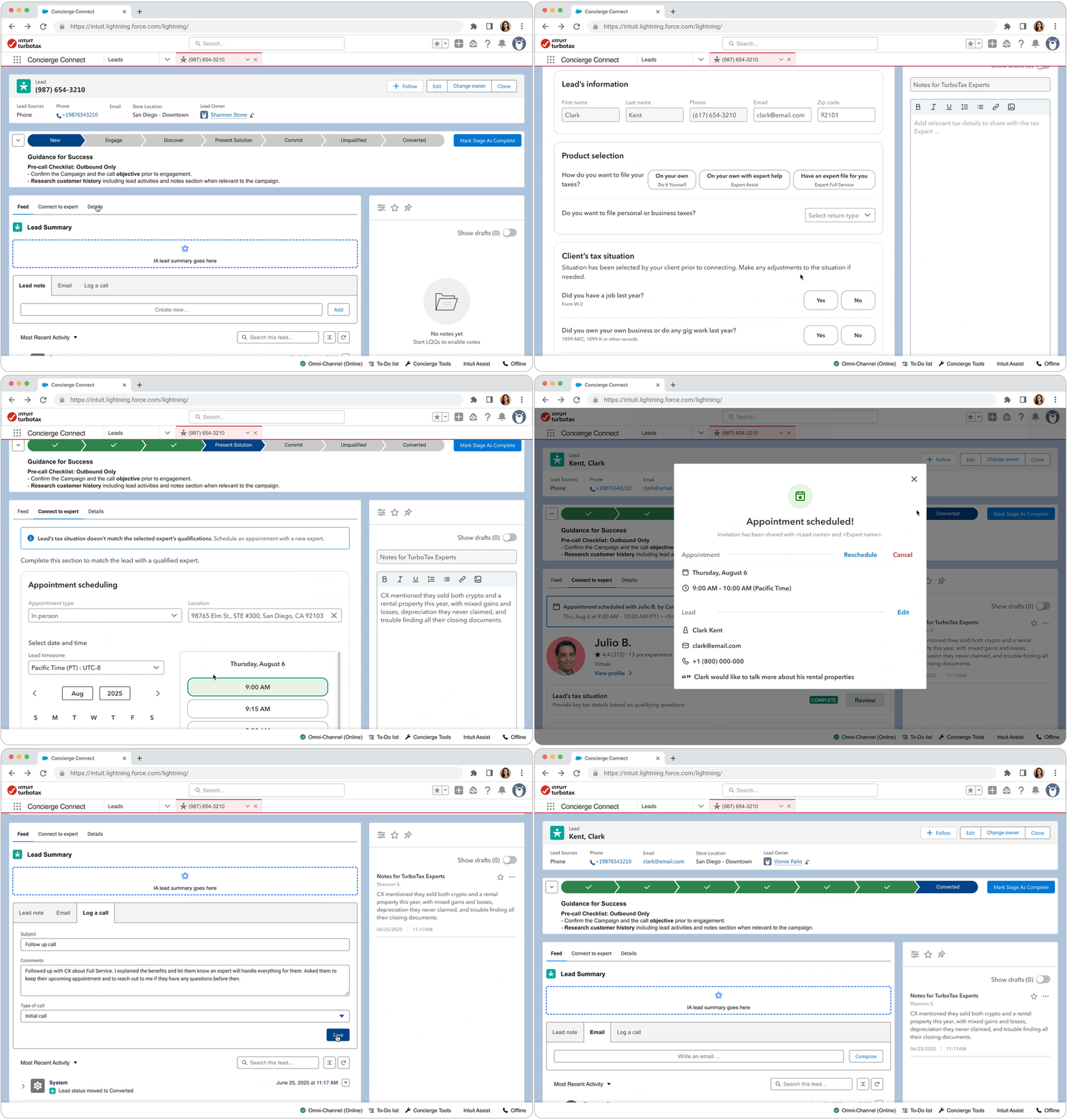
Key flow screens lead intake, LQQ flow, Connect to Expert, scheduling
The Experience
One of the most effective ways to understand what Concierge does is to see it in action. This walkthrough captures the full end-to-end flow, starting from a customer discovering TurboTax as an option, through the conversation with a Concierge, all the way to a booked appointment with an expert.
Key design decisions
Single-surface notes
Notes are always visible, always editable, and shared between Concierge and expert. No separate fields, no tab switching, no context lost at handoff. Positioned persistently so Concierges can start writing the moment someone picks up the phone.
Conversation-first LQQ flow
Rather than forcing an early branching decision, the flow opens with discovery collecting tax situation details through natural conversation before routing to scheduling or warm transfer. This matched how Concierges actually work.
Automated expert matching with transparent fallback
The system qualifies and matches experts automatically based on LQQ responses, with a clear fallback to virtual when no local expert qualifies. When the system overrides or updates a match, it shows its work.
Expert-by-location booking
One of the most-requested features from research is the ability to search for experts by location and book in-person appointments by specific experts, while ensuring qualification and availability. Shipped in V3.5 to 400+ Concierges.
Appointment intent capture
At booking, the system captures customer intent and passes it to the expert ahead of the appointment, reducing no-shows and giving experts real context before the call starts.
In-store vs. virtual
The two archetypes share most of the same core flow but diverge in a few areas. In-store concierges need store wayfinding, walk-in handling, and in-person appointment logic. Virtual concierges run outbound campaigns and need better pipeline visibility and follow-up tooling.
Designing for both from the start rather than retrofitting one onto the other was a deliberate call that paid off when v3 scaled to 400+ Concierges across both channels.
Full E2E walkthrough: from first discovery to booked appointment.
Future Vision
AI-native Concierge in IEP
The current Concierge experience runs on Salesforce. The longer-term vision which I explored as a design provocation in Roundtable 3 is migrating Concierge into IEP as a fully AI-native experience.
The case for it: Concierge hands off to experts who live in IEP. Today, that handoff crosses platforms and context gets dropped. A unified platform means shared context, tighter handoffs, and no duplicated tooling.
Results
38% ET2S against a 14% target. 59% S2C against a 61% target. 142K customers handled. Volume was the miss, not conversion.
Concierge alone nearly matched online lift, and combined with online jumped to +44.9pp over non-AE. Nearly 47% of customers were net new to TurboTax, higher than any other AE channel.
Warm transfer customers started 3x faster than appointments (0 days vs 3 days median), a signal that shaped how we think about routing going forward.
V3 and V3.5 expanded the program at scale. Outbound capacity increased 4x per Concierge, all 3 holdout campaigns showed positive S2C lift, and expert-by-location booking, appointment intent capture, and lead deduplication shipped to 400+ Concierges by March 2026.
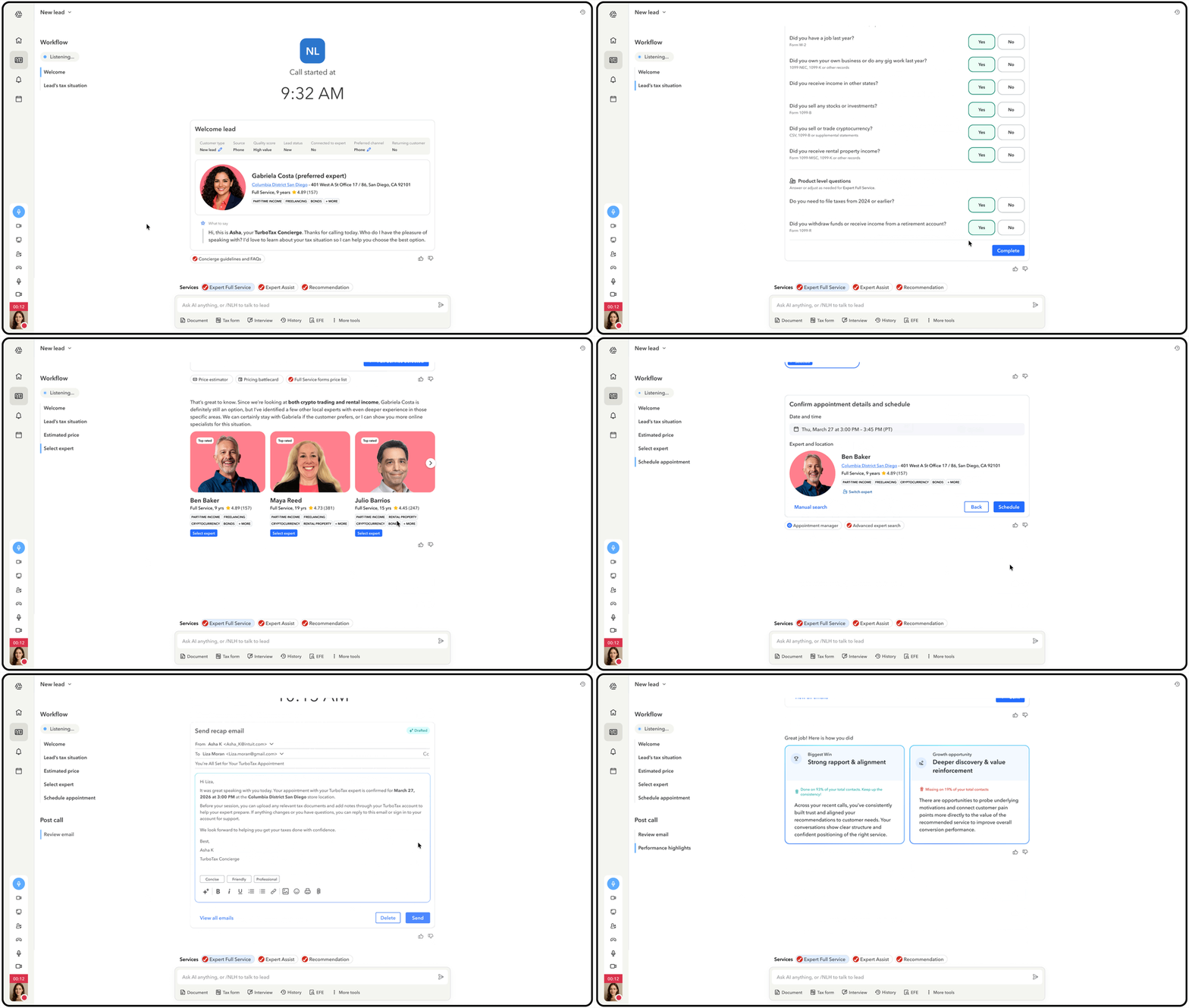
Provocation screens AI-native Concierge in IEP
Concierges reacted with overwhelming enthusiasm for IEP over Salesforce, especially around AI capabilities, ecosystem integration, and cross-team visibility.
What an AI-native Concierge in IEP could enable:
Real-time AI assistance during live calls, LQQs, suggested next steps, and pricing surfaced inline as the conversation unfolds
Auto-drafted follow-up emails based on call context
Live call coaching and post-call summaries that reduce administrative burden
Full engagement visibility across Concierge, Product Experts, and Domain Experts on one platform
AI-driven lead intent scoring to route high-propensity customers to humans and deflect low-intent traffic to automated flows
The FY27 roadmap is already moving in this direction with 2-way SMS, live chat, post-call coaching, and in-call AI intent scoring on the near-term horizon. The provocation work from this case study directly informs where that goes next.
Other design provocations
Alongside the IEP concept, Roundtable 3 tested three additional ideas with Concierges. All three landed with strong support and are worth exploring as the program scales.
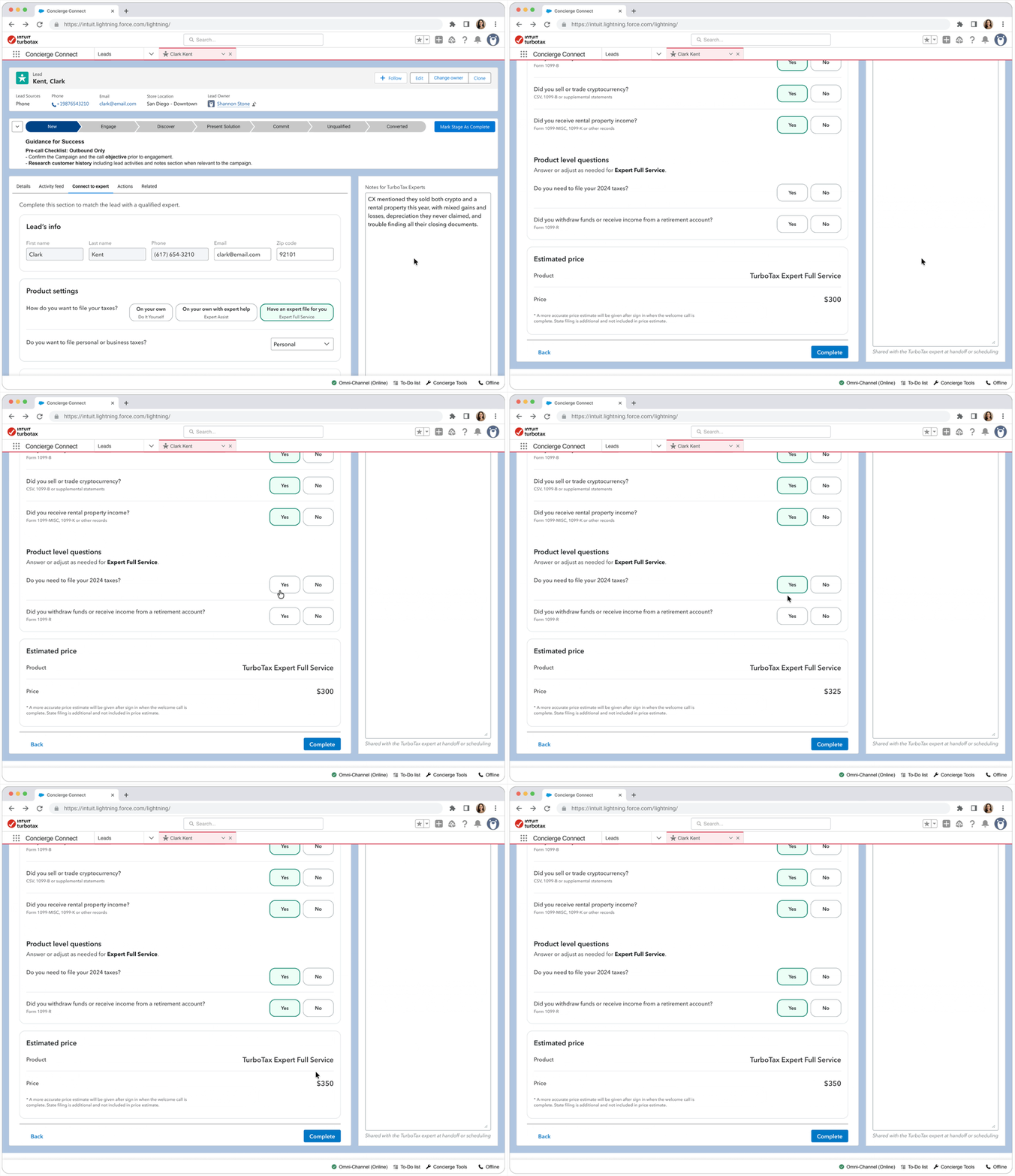
Embedded pricing
Embedded pricing directly into the flow rather than routing to a separate tool mid-call. Concierges could quote confidently without losing momentum, and reaction was overwhelmingly positive.
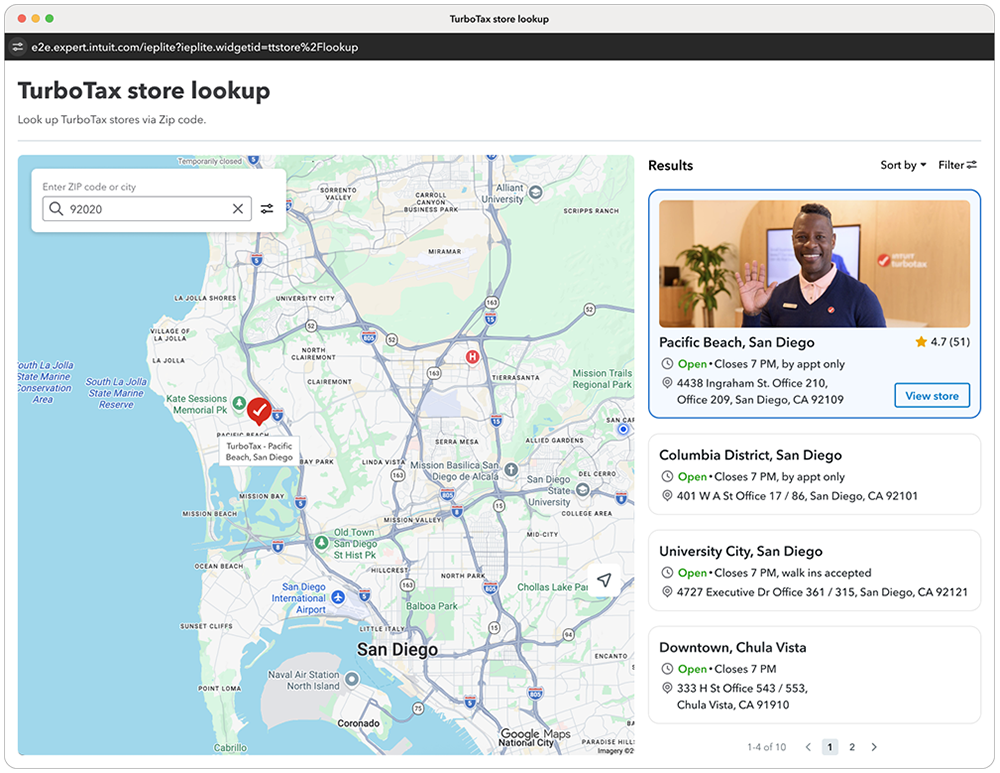
Store locator
An in-context tool for finding nearby TurboTax locations and understanding in-person options. Most valuable for customers who expressed a preference for face-to-face service.
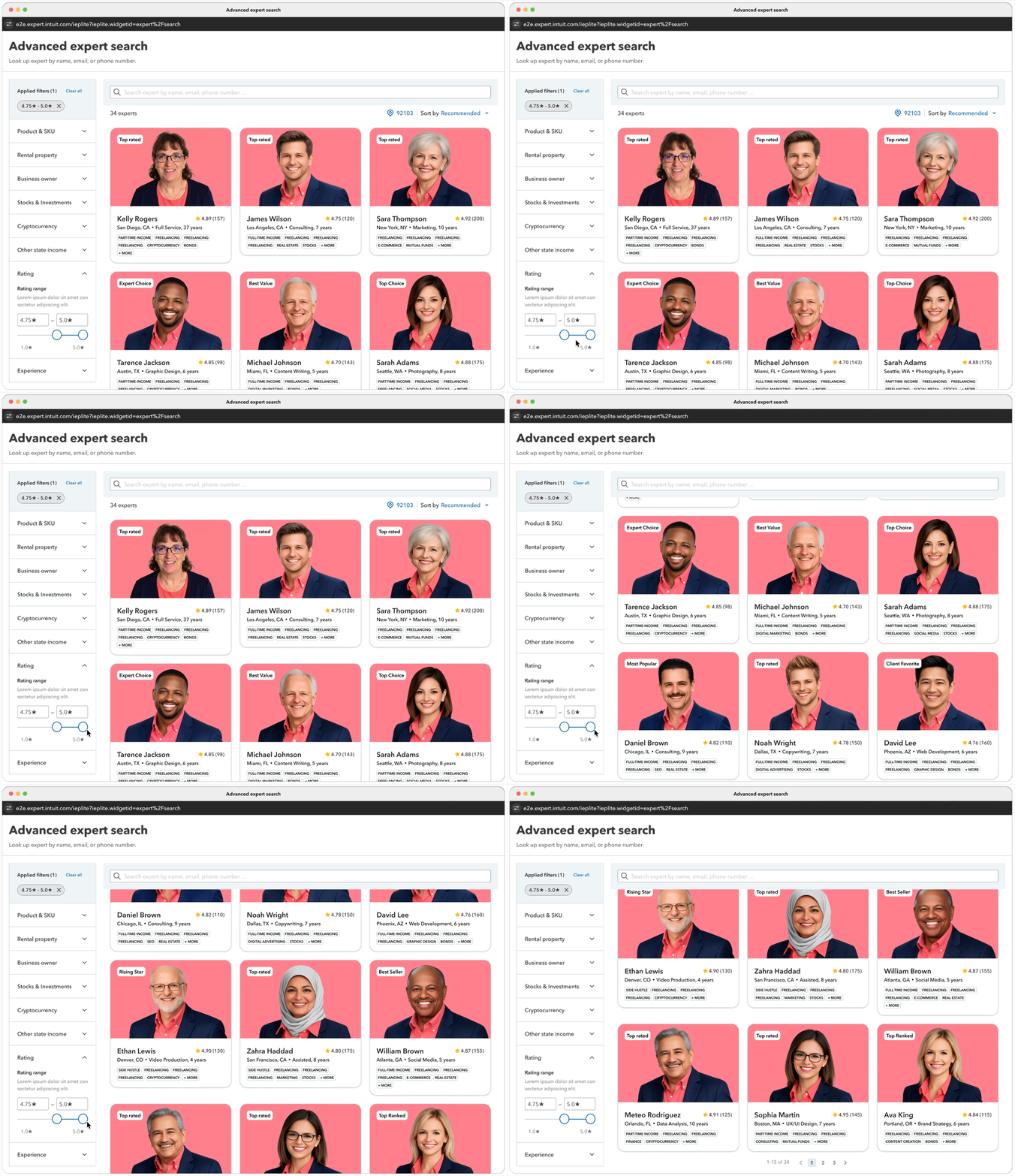
Expert search
A flexible search experience letting Concierges find and filter experts by qualification, availability, and location. The group wanted more control over matching for complex tax situations.